Kamakura in one day on foot: a walking itinerary
This Kamakura one day walking itinerary starts at the Zen temples of Kita-Kamakura and walks south through the old shogun's capital: Engaku-ji, Kencho-ji, Tsurugaoka Hachimangu and Komachi-dori, then a three-stop ride on the Enoden to the Great Buddha, Hase-dera and the beach at Yuigahama. Lunch and dinner sit along the route. Kamakura is about an hour from Tokyo by train, so the whole plan works as a day trip.
I built the day in Passage AI for a Tuesday in December. I added the nine stops, set the times around winter opening hours, ran Optimize and ran the Need tickets? scan. Hours, prices and booking rules are checked against the official sites and linked below.
Last checked: Nov 2026. Temple hours change with the season. Open the linked official page for your date before you go.
The Kamakura one day walking itinerary at a glance
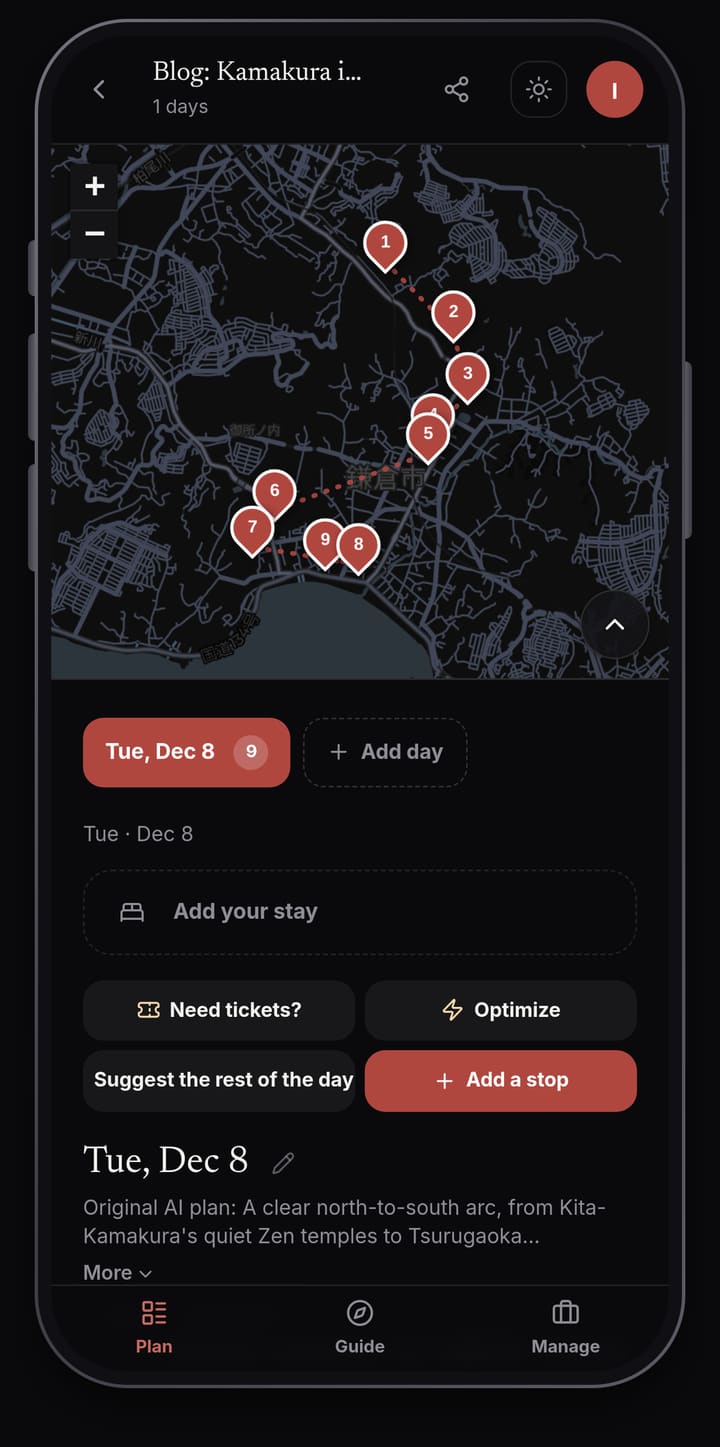
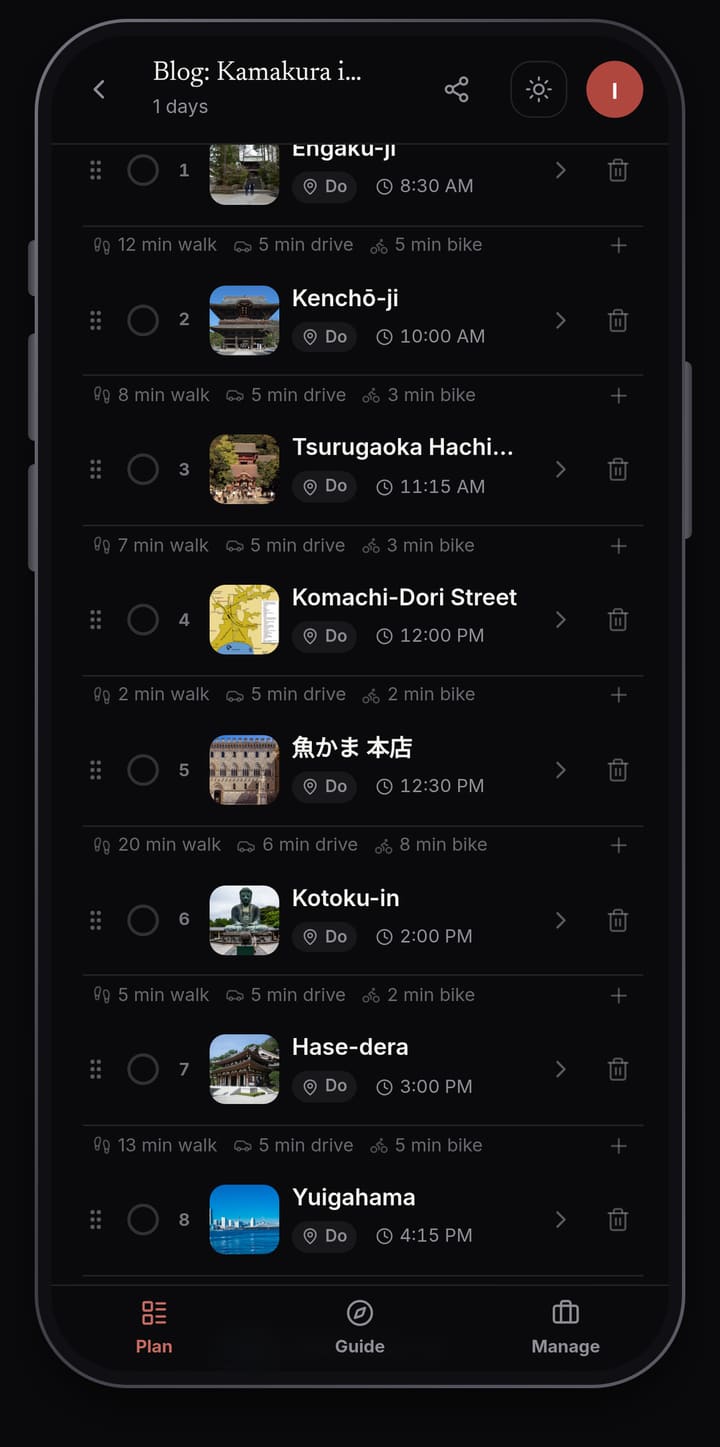
The table shows the day in order, with a suggested time for each stop and the walk to the next one. It's planned for a Tuesday in December, so the times fit winter opening hours.
| # | Stop | Suggested time | Walk to next stop |
|---|---|---|---|
| 1 | Engaku-ji | 8:30 | about 12 min |
| 2 | Kencho-ji | 10:00 | about 8 min |
| 3 | Tsurugaoka Hachimangu | 11:15 | about 7 min |
| 4 | Komachi-dori | 12:00 | about 2 min |
| 5 | Uokama (lunch) | 12:30 | about 20 min, or the Enoden |
| 6 | Kotoku-in, the Great Buddha | 2:00 | about 5 min |
| 7 | Hase-dera | 3:00 | about 13 min |
| 8 | Yuigahama beach | 4:15 | about 4 min |
| 9 | Kamakura Matsubara-an (dinner) | 5:15 |
Walk times in Passage AI are straight-line estimates between stops at walking pace. Tap Directions and your phone's maps app opens with the street route. Lunch to the Great Buddha is the longest leg of the day. You can walk it, or take the Enoden from Kamakura station three stops to Hase and walk from there. All the other legs together come to about 50 minutes.
Stop by stop
1. Engaku-ji, 8:30
Take the JR Yokosuka Line to Kita-Kamakura station. Engaku-ji's gate is a one-minute walk from the station, and the temple opens at 8:30. Entry costs 500 yen for adults and 200 yen for children. From December to February it closes at 16:00 instead of 16:30, which is one more reason to see it first. (official site)
Engaku-ji was founded in 1282, and its halls climb a wooded hillside one after another. Its great bell, cast in 1301, is the largest temple bell in Kamakura. Give the temple about an hour.
2. Kencho-ji, 10:00
Kencho-ji was completed in 1253 and ranks first among Kamakura's five great Zen temples. The temple's own access page puts it about 15 minutes on foot from Kita-Kamakura station. It's open 8:30 to 16:30, and entry is 500 yen for adults, 200 yen for children, cash only. (official page)
The temple asks visitors to start at the Buddha hall, home of its main image, the bodhisattva Jizo. Give it about an hour.
3. Tsurugaoka Hachimangu, 11:15
From Kencho-ji, walk on into central Kamakura to Tsurugaoka Hachimangu, the city's main Shinto shrine. Minamoto no Yoritomo, who founded the Kamakura shogunate, moved the shrine to this site, and the shrine's own site says the city grew outward from it. The straight avenue in front of it, Wakamiya Oji, is about 1.8 km long.
The shrine's official site lists the gates as open 6:00 to 20:00 all year, so there's no clock to beat here. (official site) Walk up to the main hall, then back down through the grounds toward the town.
4. Komachi-dori, 12:00
Komachi-dori is the shopping street that runs about 360 metres from the shrine's corner down to the east exit of Kamakura station, alongside Wakamiya Oji. Food and souvenir shops line both sides, and as a public street it needs no booking. Browse it on the way to lunch.
5. Lunch at Uokama, 12:30
Lunch is shirasu-don (whitebait over rice) or a seafood bowl at Uokama, on the second floor of a building three minutes from the east exit of JR Kamakura station. It's open 11:00 to 21:00 with no closing day listed. (official page)
6. Kotoku-in, the Great Buddha, 2:00
From Kamakura station, take the Enoden line three stops to Hase: Wadazuka, Yuigahama, then Hase. The temple says it's about 7 minutes on foot from Hase station. If you plan to ride the Enoden several times, the Noriorikun 1-day pass costs 800 yen for adults and 400 yen for children from the machines at any station. (Enoden pass page)
The bronze Buddha dates from around 1252, by the temple's own records, and has sat in the open air since a tsunami washed away its hall in 1498. From October to March the grounds are open 8:00 to 17:00 (April to September until 17:30), and the last entry is 15 minutes before closing. Entry is 300 yen for adults and 150 yen for children, with no booking needed. You can also go inside the statue for another 50 yen, from 8:00 to 16:30. (official site)
7. Hase-dera, 3:00
Hase-dera is the other big temple at Hase, 5 minutes on foot from the station by its own page. It holds a wooden statue of the eleven-headed Kannon that stands over 9 metres tall, and the Enoden's own guide notes its views of the sea and its hydrangeas. Reception runs 8:00 to 16:30 for most of the year (the gates close at 17:00), and from April to June it runs until 17:00. Entry is 400 yen for adults and 200 yen for children. (official page)
Arriving at 3:00 leaves you an hour and a half before reception closes on a winter afternoon.
8. Yuigahama beach, 4:15
From Hase-dera, walk down to the sea. Yuigahama is Kamakura's town beach, part of a stretch of sand about 3.2 km long that runs east to Zaimokuza. Late afternoon is a good time to walk along the sand before dinner.
9. Dinner at Kamakura Matsubara-an, 5:15
Dinner is soba at Kamakura Matsubara-an's main shop, in an old house three minutes from Enoden Yuigahama station. It's open 11:00 to 21:30 (last order 20:30) with no closing day listed. (official page) From there, the Enoden takes you two stops back to Kamakura station for the train to Tokyo.
How Optimize ordered the day
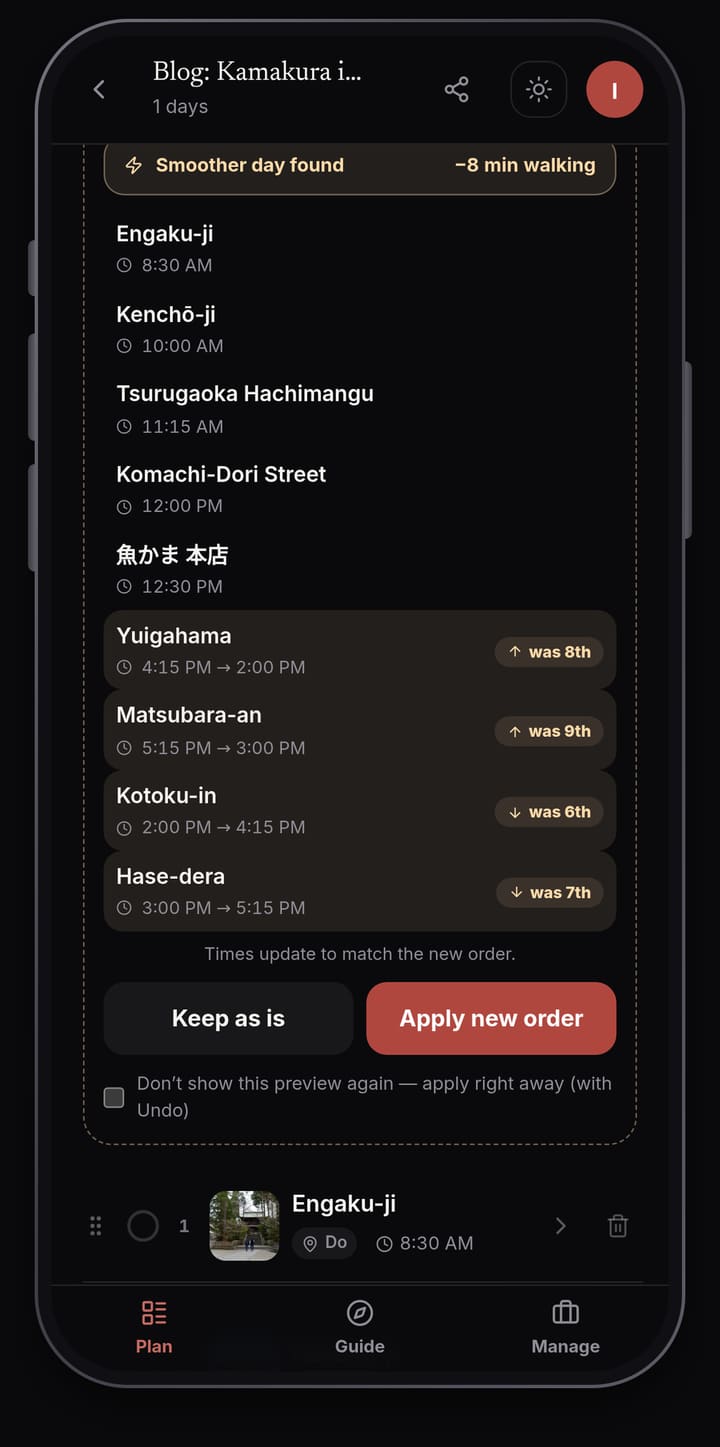
Optimize found an order with 8 minutes less walking. It keeps the morning as it is, then goes to the beach and Matsubara-an after lunch and saves the Great Buddha and Hase-dera for the end of the day. Both orders work. I kept the temples for the early afternoon and the beach and soba for the evening. Tap Apply if you'd rather take the shorter walk.
Optimize shows a preview with each stop's old position first, and nothing changes until you press Apply.
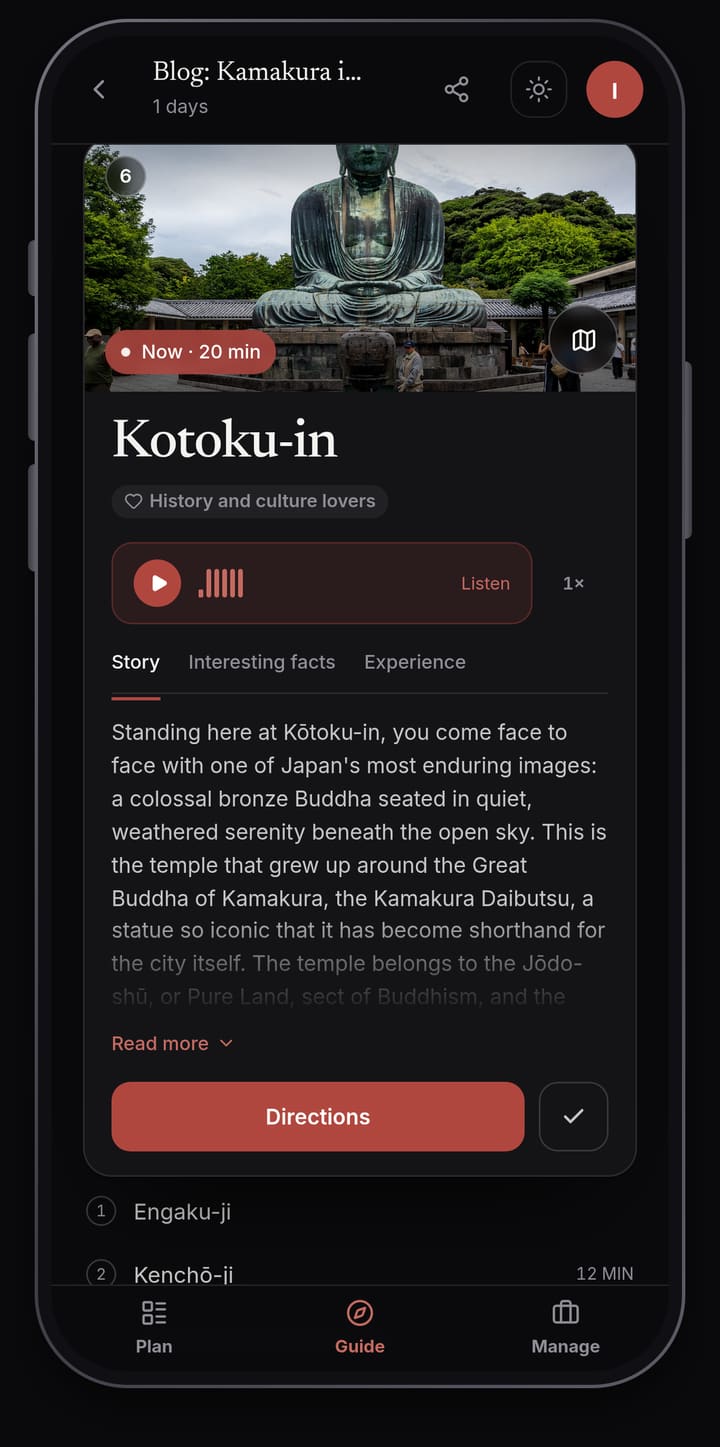
When you reach a stop, Passage AI's Guide opens a card for it with a short story about the place. Tap Listen to hear it read aloud.
What Need tickets? flagged, checked against the official sites
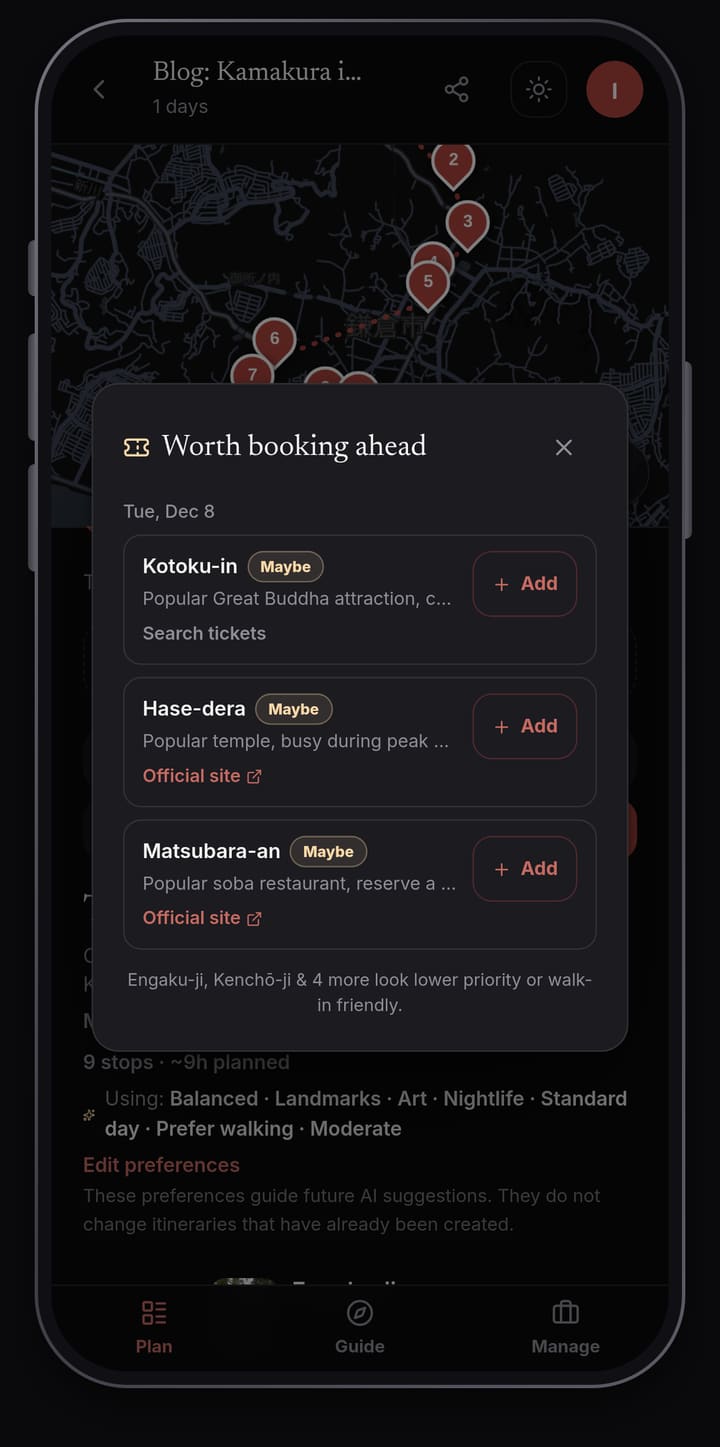
Need tickets? scans the whole trip and marks the stops that usually need booking, with a link to search for tickets or open the official site. It flagged three of the nine as "Maybe":
| Stop | App said | Official site says (Nov 2026) | My call |
|---|---|---|---|
| Kotoku-in (Great Buddha) | Maybe | No booking needed; 300 yen, plus 50 yen inside | Pay at the gate |
| Hase-dera | Maybe | 400 yen at reception; hydrangea-season ticket booking | Pay at the gate; check the site in hydrangea season |
| Kamakura Matsubara-an | Maybe | Open daily; booking link on its page | Book for a weekend dinner |
The app marked Engaku-ji, Kencho-ji and the other four stops as lower priority or walk-in friendly. That matches the official pages: both Zen temples list a 500 yen entry you pay on arrival, Komachi-dori and the beach are public, and Uokama lists no closing day and asks for no booking.
What to skip or swap
- Want the bamboo grove? Hokoku-ji, on the east side of town, has a bamboo garden. Entry is 400 yen for adults (200 yen for children), and reception runs 9:00 to 16:00. It closes to visitors from 29 December to 3 January. Its matcha tea seat (600 yen) has a renovation notice on the site, so check before you go. (official page) It's a taxi or bus ride from Kamakura station, so swap it in for Komachi-dori rather than adding it on top.
- Short on time? Skip Kencho-ji and take the JR train from Kita-Kamakura to Kamakura after Engaku-ji. You still get one great Zen temple in the morning.
- Visiting in hydrangea season? Hase-dera runs a hydrangea ticket booking on its site, so check its page before you go. From April to June it also stays open later, with reception until 17:00.
- Visiting in winter? Engaku-ji closes at 16:00 from December to February, and Hase-dera's reception closes at 16:30. This order sees both before they close.
FAQ
Is one day enough for Kamakura?
One day covers the classic Kamakura walk: two Zen temples in Kita-Kamakura, Tsurugaoka Hachimangu, the Great Buddha and Hase-dera, plus the beach. Most of it is on foot, with one short Enoden ride to Hase. Add a second day if you also want the east-side temples such as Hokoku-ji, or Enoshima.
Can you walk from Kamakura station to the Great Buddha?
You can, but the easy way is the Enoden: it's three stops from Kamakura to Hase, and Kotoku-in says the Great Buddha is about 7 minutes on foot from Hase station. Buses from Kamakura station's east exit also stop right in front of it.
How much does this Kamakura day cost in entry fees?
For one adult: Engaku-ji 500 yen, Kencho-ji 500 yen, the Great Buddha 300 yen (plus 50 yen to go inside), and Hase-dera 400 yen. That's 1,750 yen with the inside of the Buddha. Kencho-ji takes cash only, so carry yen. Add the Enoden fare and your meals.
Do you need to book anything in advance?
Not for the temples on this route in December. They list entry fees you pay on arrival, and Kotoku-in states that no booking is needed. Book dinner if your date is busy. In hydrangea season, check Hase-dera's site for its hydrangea tickets.
How do you get to Kamakura from Tokyo?
The JR Yokosuka Line runs direct from Tokyo station to Kamakura in about an hour, and the JR Shonan-Shinjuku Line runs direct from Shinjuku in a little under an hour. For this route, get off at Kita-Kamakura instead. Check the train times for your travel day.
What day of the week is best for this walk?
Every temple on the route opens daily, so any day works. Weekends and holidays bring more day-trippers from Tokyo, so pick a weekday if you can. In winter, start early: Engaku-ji closes at 16:00 from December to February.
How this was made: planned in Passage AI on 19 November 2026, facts checked against the official sites of Engaku-ji, Kencho-ji, Tsurugaoka Hachimangu, Kotoku-in, Hase-dera, Hokoku-ji, the Enoden railway and each restaurant, written by Edward.
Cover photo: lumoplank on Wikimedia Commons (CC0 1.0, cropped)


